

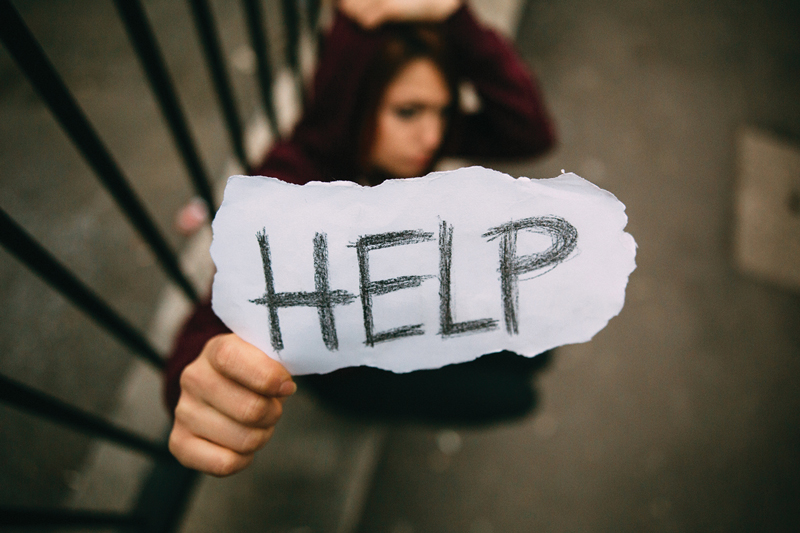
The signs aren’t always this obvious when a youth in remote or rural Alberta needs suicide prevention help. But a government grant program does aim to make more support and prevention services available to youth throughout the province. Photo by iStock
No matter how rural, remote, complex or demanding their homelife is, youths at risk of suicide should be able to find support when and where they need it.
That ideal underpins a $2 million grant program accepting applications until June 1, Alberta Minister of Children and Family Services Searle Turton told The Gazette.
Myriad programs and options for youth are at most a bus ride away in the big city. But that isn’t true in Fort Macleod, Pincher Creek or “in my neck of the woods,” said Turton, the UCP member representing Spruce Grove-Stony Plain.
“The last thing I want to hear about is someone that’s going through their darkest day and they don’t know where to turn to for help, and they couldn’t receive the assistance that they required,” the minister said.
“That’s something that keeps me up in the middle of the night. So it plays a big part when I’m having conversations with stakeholders about how we can make sure these programs are accessible throughout the entire province.”
Non-profits, First Nations, Metis settlements and Indigenous organizations operating in Alberta are eligible for funding under the Youth Suicide Prevention Grant Program, which targets Albertans under 25 years old. Available are grants from $40,000 to $175,000 for one year that expand existing initiatives or pilot new ones.
The Alberta government launched the program four years ago to help reduce suicide and suicide attempts. Since then, it’s provided funding for more than 30 community-based projects and connected more than 5,000 youths with information and mental health resources.
Measuring success is difficult but Turton has faith in the value of programming that’s earned support so far.
“It’s always hard to prove a negative, but I know, with how many people who have been accessing the programming and its supports, that we’re making a difference. And those individuals are spread throughout the province, from the far north to the far south.”
In a past round of grants, a youth-led initiative in east-central Alberta received funding to train, educate and provide awareness to frontline workers, families, community members and youths themselves. The project of the Neutral Hills Learning and Community Connection Centre also created a peer-to-peer support project called Leading with Hope.
Over its two-year span, the project trained more than 200 community members in places like Castor, Coronation, Consort, Halkirk, Brownfield, Veteran and Altario, located one and a half to more than three hours east of Red Deer by car. The primary service hub is Stettler, a town of about 6,000 people that’s at least 40 minutes away for anyone in the project area.
Meanwhile, to serve St. Albert and Sturgeon County near Edmonton, $95,000 went to the hiring of a youth suicide prevention co-ordinator to work with school boards and service agencies.
That money was part of a yearly provincial grant worth $125,000 to two groups and guaranteed for two years. The remaining $30,000 a year allowed Stop Abuse in Families to expand its youth counselling services.
Among other past recipients are Camrose Open Door, Gift Lake Métis Settlement, the YMCA of Northern Alberta, Lethbridge Family Services, the Miywasin Friendship Centre in Medicine Hat and the provincial Centre for Suicide Prevention.
Guidelines for the grant program note that some sub-populations are at an increased risk of suicide and therefore prioritized in the selection process. Those are youths:
- • In the Indigenous, immigrant, refugee or 2SLGBTQQIA+ communities.
- • In government care or shifting out of it.
- • Experiencing homelessness, mental health issues or addiction challenges.
Figuring out which applicants receive funding involves balancing a lot of variables, Turton said.
“It’s more of an art form versus a science, but at the end of the day we want to make sure that there are services in every corner of the province,” he said. “We realize it’s not exactly perfect, because the entire province isn’t the same complexity or dispersion of population.”
“But it is my intention and the goal of the ministry to make sure that everyone has access to services, no matter where they live.”
Aug. 1 is the anticipated starting date for grants this round.
Visit alberta.ca/youth-suicide-prevention-grant-program for information on applying for the grant. E-mail [email protected] with questions.
Need help now?
Turton encourages Albertans to know and share how and where to get help.
If you or someone you love or know is in a mental health-related emergency, call 9-1-1.
Other numbers include:
- • The Suicide Crisis Helpline: 9-8-8.
- • The Kids Help Phone: 1-800-668-6868.
- • The Indigenous Hope for Wellness Helpline: 1-855-242-3310.
- • The National Trans Helpline: 1-877-330-6366.
You can call 2-1-1 to find out about programs and services in your community, and 8-1-1 to reach Health Link, the provincial government’s service.
A Handy Mnemonic
To prepare yourself to do the right thing when someone is struggling mentally, think of this:
REACH
R — Recognize when someone is struggling.
E — Engage in conversation and listen.
A — Ask about suicidal thoughts and feelings.
C — Connect to support and resources.
H — Heal yourself by taking care of your own mental health.